Column · @guidedtoursofflinetravellife
How to Plan City Walks Without Relying on Mobile Data
Why an offline travel guide matters for city exploration
When you arrive in a new city, the instinct is to pull out your phone and search for things to do. But mobile data can be patchy, expensive, or simply unavailable in certain areas. Underground metro stations, historic districts with thick stone walls, and foreign countries where your roaming plan falls short all create moments where an online connection disappears. That is where an offline travel guide becomes a practical tool. It lets you keep moving without interruption, accessing directions, commentary, and suggestions stored directly on your device.
Walking tours are a popular way to experience a city, but they often assume you have a reliable internet connection. If you have ever stood on a street corner waiting for a map to load, you know the frustration. An offline-capable guide solves that by letting you download everything beforehand. You get audio narration, route maps, and point-of-interest details that work without cellular service. This makes the experience smoother and more immersive. Guided Tours offline travel guide
What makes a good offline travel guide
Not all offline solutions are created equal. A useful guide needs to handle several things well. First, it must let you download content before you leave home or while you have Wi-Fi. Second, it should store that content efficiently so it does not fill your phone storage. Third, the navigation should be clear without live GPS updates. Audio cues, written turn-by-turn directions, and simple maps work best. Fourth, the guide should adapt to your preferences. Some travelers want a fast walk hitting major landmarks. Others prefer a slow pace with detours into local cafes and hidden courtyards. A good guide offers options for both.
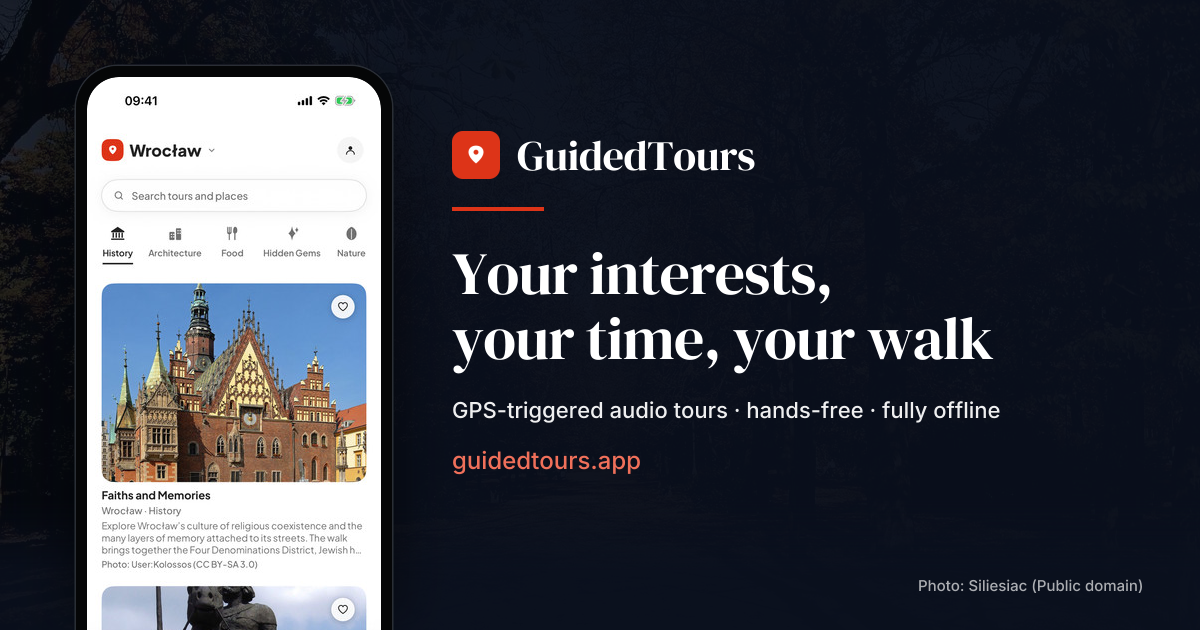
The Guided Tours offline travel guide addresses these points directly. It allows you to select tours based on your interests, available time, and walking pace. Once downloaded, the content lives on your phone. You can start a tour at any point, pause when you find a spot you like, and resume later. The audio and visual cues keep you on track without needing to check a screen constantly. This kind of design respects the fact that travel is about looking around, not staring at a device.
Choosing the right tours for your style
Before you set out, think about what you want from a walking tour. Do you prefer historical stories, architectural details, food stops, or a mix? Many offline guides let you filter tours by theme. This saves time and ensures you are not stuck with a generic route that does not match your curiosity. Also consider the length. A two-hour tour suits a morning before lunch, while a four-hour option might be better for an entire afternoon. Your pace matters too. If you like to linger at each spot, choose a shorter tour or one that builds in extra time.

Practical steps before you go
- Check that your device has enough free storage. Audio tours can take up space, especially if they include high-quality narration and multiple language options.
- Download the tours over a stable Wi-Fi connection at your hotel, a coffee shop, or the airport. Confirm the download finishes before you head out.
- Open the guide app to verify the tour loads correctly offline. Some apps show a visual indicator when content is fully cached.
- Bring a portable power bank. Even offline, your phone battery drains faster when playing audio and using the screen for navigation.
- Know the starting point of your tour. Look up the address or landmark beforehand so you do not waste time searching for it on the day.
Navigating without a live data connection
Once you are offline, the way you interact with the guide changes slightly. You cannot search for new routes or read reviews in real time. The key is to plan ahead. Decide on a primary tour and maybe a backup in case you finish early or change your mind. The guide should provide clear directions at each step. For example, after describing a landmark, it might say, "Walk to the end of the street and turn left at the blue door." These cues are more reliable than coordinates alone because they rely on visible features.
Audio guides work especially well for offline use. You can listen while keeping your eyes on the surroundings. Many people find that they remember more when they hear a story than when they read it from a screen. The combination of spoken narrative and physical location creates a stronger memory. That is one reason why self-guided audio walking tours have become so popular.
Handling common offline issues
Even with good preparation, things can go wrong. You might take a wrong turn and need to get back on route. A good offline guide includes a map or list of checkpoints that help you reorient. Some guides also provide written transcripts of the audio, which you can skim if you lose your place. Another issue is battery life. If your phone dies, you lose access to the guide. A printed backup of the route or key waypoints is a smart precaution. You can also screenshot the main map before you leave Wi-Fi.
Weather can affect your experience too. Rain or extreme heat might make you want to skip part of a tour. Flexible guides let you skip ahead or skip sections without breaking the sequence. The ability to jump to the next point is a small feature that makes a big difference when conditions change.
Offline travel guide vs. live guided tours
There are trade-offs between an offline guide and a live guided tour. A live guide can answer questions, adjust the route on the fly, and share local anecdotes that no app can replicate. But live tours have fixed schedules, group sizes, and costs that may not fit your budget or style. Offline guides give you independence. You can start when you want, stop for a meal, and explore at your own pace. You also avoid the awkwardness of tipping or feeling rushed.
For travelers who value flexibility, the offline option often wins. The Guided Tours offline travel guide gives you that control while still providing a curated experience. You are not wandering aimlessly, but you are also not tied to someone else's timeline. It strikes a balance between structure and spontaneity.
When offline is not ideal
Offline guides are less useful in a few situations. If you are visiting a city with very dynamic conditions - like a festival where street closures change daily - a live guide or online map might be better. Similarly, if you want deep local knowledge about a specific neighborhood, a human guide can offer insights that no app can. But for most standard sightseeing, an offline guide does the job well.
Making the most of your offline experience
To get the best results, treat the offline guide as a companion rather than a strict script. Stop when something catches your eye. Detour into a shop or park. The guide is there to show you the main path, but the real joy of walking a city is discovering the unexpected. Use the guide's suggestions as a foundation and let your curiosity fill in the rest.

After your tour, you can reflect on what worked and what did not. Maybe you learned that you prefer shorter tours with more frequent pauses. Or that you like guides that include food recommendations. Over time, you will get better at choosing tours that match your travel style. The offline nature of the guide means you can reuse it later or recommend it to friends who visit the same city. It becomes a resource you return to, not a one-time expense.
Final thoughts
Traveling without constant mobile data is not a limitation. It is an invitation to be more present. An offline travel guide helps you navigate confidently while keeping your attention on the streets, the architecture, and the people around you. By choosing the right guide and preparing properly, you can explore any city on your own terms. Whether you are a first-time visitor or a seasoned traveler, the ability to walk and listen without worrying about signal bars is a small luxury that makes a big difference.
Guided Tours on social media
 Twitter
 Facebook
 Instagram
 YouTube